What residency means
A resident company has an ongoing relationship with a venue rather than appearing as a one-time touring attraction. The exact arrangement can involve performance dates, rehearsal access, production support and shared public identity. Residency does not necessarily mean the company owns the building or works there every day.
The benefit is continuity. Musicians, dancers, crew and front-of-house staff become familiar with the room's timing and practical limits. Audiences learn to associate a form with a place. The venue gains a recurring artistic center while still presenting other events and rentals.
The orchestra's long Stamford history
Orchestra Lumos traces its roots to a Stamford Symphony founded in 1919. The ensemble later ceased performing, re-formed as a charitable organization in 1967 and became fully professional in 1974. It took the Orchestra Lumos name in May 2022, reflecting a wider regional identity.
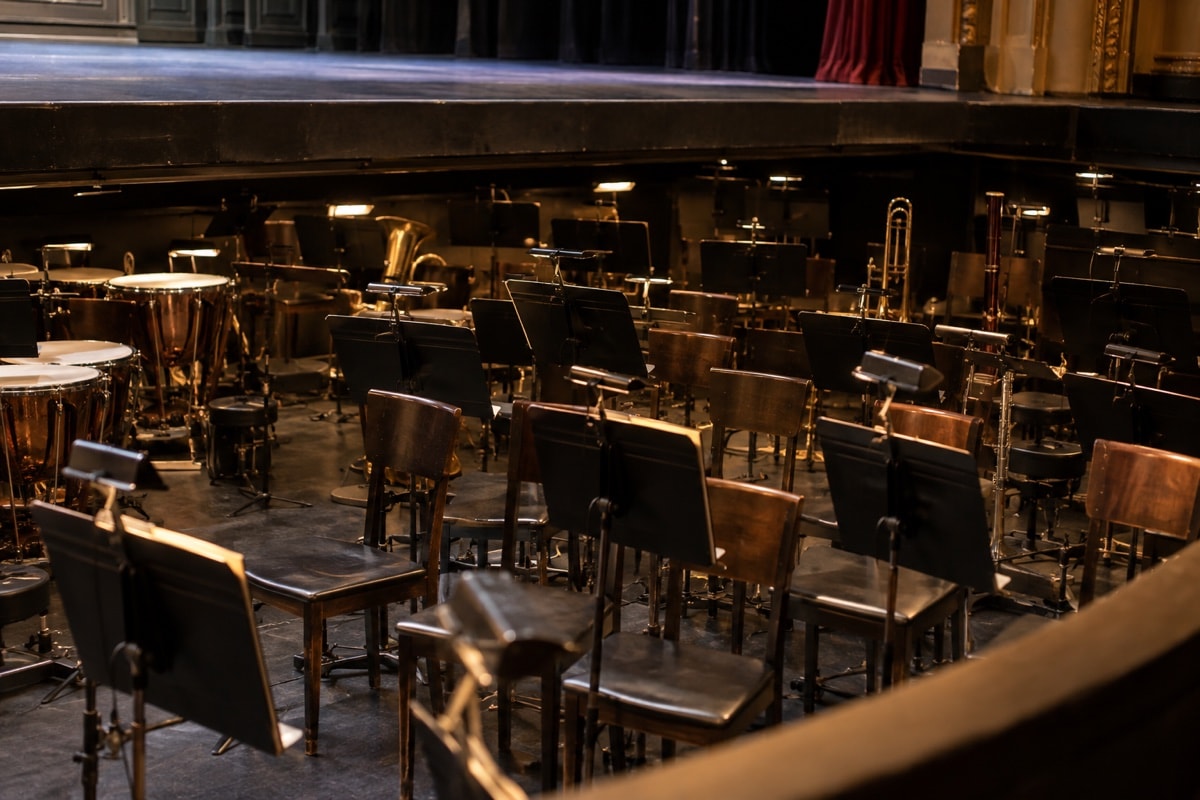
A full orchestra uses the theatre as both acoustic space and visual platform. Players need room for sections, music stands and percussion; backstage routes must accommodate instruments; lighting should support reading without flattening the stage picture. Repeated work in one hall helps an ensemble understand how sound reaches the orchestra and balcony levels.
Ballet and the proscenium
Connecticut Ballet's account of the Palace describes the 1927 house and its early-1980s return to live use. Ballet has a natural relationship with a proscenium because the opening frames patterns across the floor and scenery can create depth behind the dancers. Wings allow entrances to emerge from outside the visible world.
The floor, stage depth, temperature, rehearsal schedule and crossover routes all affect the production. When ballet returns to the same theatre, the company can plan with knowledge of those conditions. The audience also develops a seasonal memory: familiar architecture becomes the frame for changing movement and design.
A holiday work as recurring tradition
The Nutcracker is a ballet widely associated with holiday performance. Its return in many cities demonstrates how a work can become part of an annual theatre rhythm. Each production still makes choices about choreography, design, scale and musical forces.
Tradition does not mean the event is mechanically repeated. Casts change, cues are refreshed, costumes are maintained and young audience members may encounter the theatre for the first time. A recurring work links institutional memory with a new live occasion.
Shared stages and distinct identities
A resident relationship works best when the company and venue remain understandable as separate organizations. The theatre provides a room and operational framework; the company brings artistic leadership, performers and repertoire. Public information should make clear which organization is responsible for each part of the event.
Several companies may share one stage across a season. Their production needs can be very different, but they also build a collective picture of the local arts. An orchestra reveals the room through sound; ballet through movement and framed depth; a smaller ensemble may emphasize closeness.
Beyond performance night
Resident companies can connect performance with rehearsals, school activity, talks and community events, depending on their current programmes. Those activities require the same care in scheduling, access and communication as public performances. They are not simply extras added to an empty day.
The broader value of residency is sustained attention. A touring event arrives and leaves; a resident company can revisit the same audience, develop long projects and let familiarity deepen rather than repeat.
Reading local cultural history
The orchestra and ballet help explain why the Palace is more than an attractive old auditorium. A live stage becomes culturally durable through the organizations that repeatedly use it, the crews that know it and the audiences that return.
This page describes those relationships in general and from the named organizations' own published histories. It carries no schedule and speaks for none of them. Current activity belongs on each organization's official information channels.
A relationship audiences can recognize
Residency becomes legible through return: the same ensemble revisiting a room, a recurring work gathering new viewers, and technical teams developing shared knowledge. That continuity gives a venue character without requiring every event to come from the resident company.