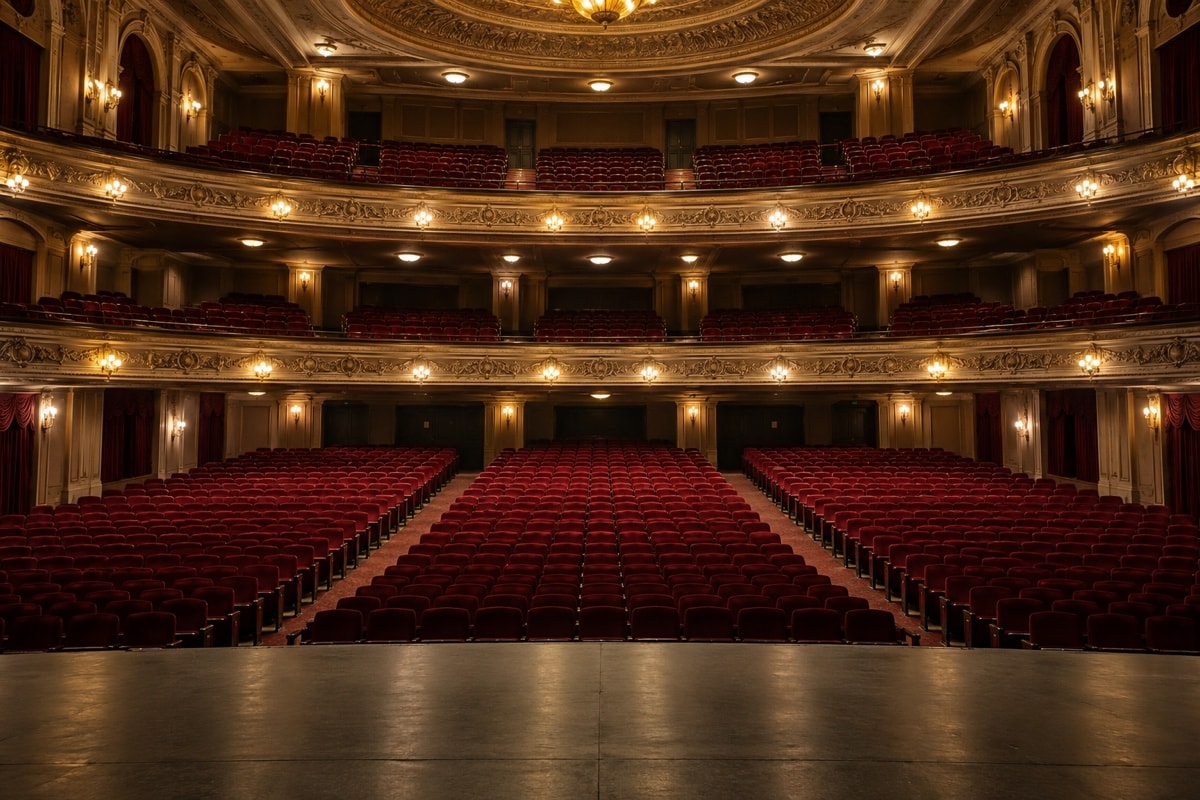
Start with priorities
A seating chart is a diagram, not a promise of identical experience. Before comparing sections, decide what matters most: facial detail, a balanced full-stage view, closeness to sound, easy aisle access, minimal stairs or space for a mobility device. The answer can change with the event.
A play with subtle expression may reward proximity. Ballet and large musicals can benefit from a little height because patterns across the stage become clearer. Amplified concerts depend on loudspeaker design, while an orchestra's acoustic balance changes with distance and balcony overhangs.
Orchestra level
The orchestra is the main seating floor. Central locations often give a direct view of the proscenium, but the closest rows can require more upward viewing and may reveal less of the stage floor. Side locations change the angle and can place scenery or performers behind one another.
Rows beneath a deep balcony may feel visually enclosed and can sound different from open locations. A chart may not show the extent of an overhang clearly. Photographs from a generic seat can help, but only current venue information can describe a specific obstruction.
Mezzanine and balcony
A mezzanine is usually the first elevated section, though names vary. Its height can provide a strong view of the full stage picture without the distance of an upper balcony. The front edge may include a rail or safety barrier that affects shorter viewers.
Balcony seats emphasize composition. Lighting, choreography and scenic geometry can read clearly from above, while faces appear smaller. Stairs, steepness and legroom deserve attention. The broad parts of a theatre building are common, but every auditorium arranges them differently.
Boxes and side angles
Boxes create a distinctive architectural experience and a strong sense of the auditorium. Their view may be sharply angled, and action near one side of the stage can be difficult to see. They are best chosen with awareness of the production and the actual sightline.
Some modern seating maps use the word box for small side sections that differ from historic enclosed boxes. Read the chart legend rather than relying on the name. A limited-view notation should be treated as meaningful, not as a minor footnote.
Aisles, legroom and movement
An aisle seat can make entry, exit and stretching easier, but it also experiences more passing movement before the performance. Center seats may offer visual symmetry while requiring several people to stand during arrival. Legroom changes by row, section and building.
If standing, stairs or a narrow row is difficult, ask for functional detail. A statement that a seat is on the orchestra level does not prove the route has no steps. Similarly, a lift to a level does not describe the path from lift to row.
Accessible seating is not one category
The Department of Justice's ADA ticketing guidance discusses wheelchair spaces and companion seats as part of accessible admission. A wheelchair location, transfer seat and seat reached without stairs are not interchangeable. Companion placement and line of sight are also part of the choice.
Production equipment can change availability, so use the official current seating source. This guide has no real-hall seating chart and handles no reservations. Its diagrams and descriptions are deliberately generic.
Read the map like a section drawing
Locate the stage, center line, aisles, level breaks and any marked overhang. Then imagine the vertical relationship: how high is the section, what sits above or below it, and which route reaches the row? A flat diagram becomes more useful when read as a three-dimensional room.
No section is universally superior. A thoughtful choice matches the event and the person attending, then confirms any essential access or sightline detail with the current venue.
Sound and view are separate choices
A seat with a perfectly centered view may not match a listener's preferred sound, and a close seat may sacrifice the overall composition. Think about the dominant experience of the event. Spoken drama, amplified music, ballet and a large ensemble distribute attention differently. The chart is most helpful when read through that artistic priority.