The opening and the room behind it
A proscenium theatre presents the stage through a framed opening. A technical description starts by separating that visible opening from the larger working space around it. The stage may extend beyond the frame into wings at each side, rise into a fly loft above and continue into crossover or storage areas behind. What an audience sees is only a portion of the production volume.
The proscenium establishes a clear relationship between audience and scene. Designers need to know its width and height, but dimensions alone are not enough. Curtains, masking, sightlines and the location of fixed architectural elements determine how much of the backstage world can remain concealed from different seats.
Floor, wings and load-in
Stage-floor information covers material, condition, allowable fastening methods and level changes. Dance, scenery and rolling equipment place different demands on a surface. Wing descriptions identify clear space beside the acting area, obstructions, doorways and routes to storage. A large set can be easy to draw and difficult to move if a turn is too tight or a doorway too low.
Load-in notes follow the path from vehicle access to stage. They describe doors, corridors, ramps, lifts and changes in elevation. The point is not bureaucratic detail. It is choreography for heavy objects. A clear route reduces surprises and lets a crew plan labor, timing and equipment before anything arrives.
The fly system overhead
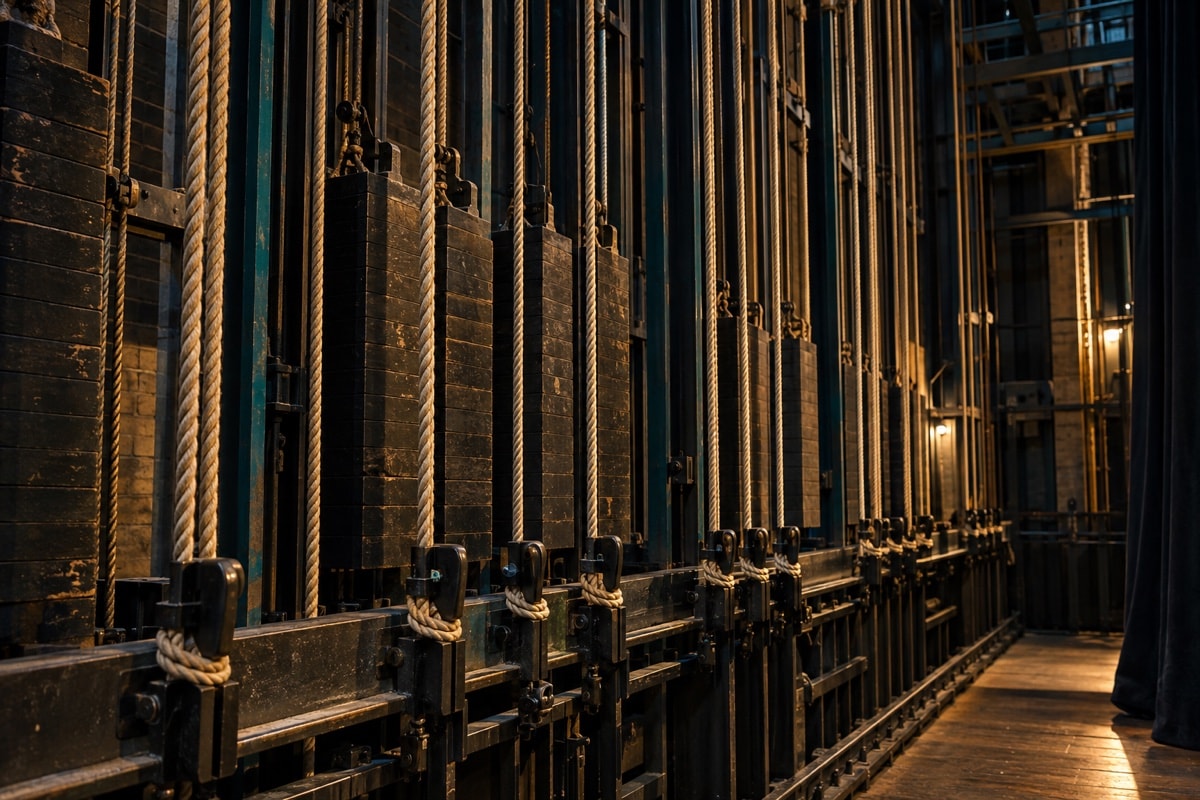
A fly system moves scenery, curtains and lighting equipment vertically. Battens span the stage, lines connect them to operating positions, and counterweights help balance loads. The fly loft provides height for scenery to rise out of the audience's view. A specification identifies the system type, operating side, available positions and limits that a qualified crew must observe.
The repeated ropes and weights at a fly rail can look like a musical instrument, but they are part of a safety-critical working system. Crew assignments, communication and established procedure matter as much as the equipment. A visiting production therefore discusses its hanging plan with the venue's technical team rather than treating the room as an empty shell.
Light, sound and electrical positions
Lighting information maps where instruments can hang and where control and power are available. Front-of-house positions may sit over the audience; stage positions can include overhead pipes, side booms and floor locations. Each angle shapes faces, scenery and depth differently. A plan also considers safe access for focusing and maintenance.
Sound notes identify loudspeaker locations, mixing positions, signal paths and practical limits. The best control position usually lets an operator hear something close to the audience experience. Temporary equipment still has to coexist with aisles, exits and sightlines. Technical planning is the art of fitting one production's needs into a shared public building.
The orchestra pit and flexible rooms
An orchestra pit sits between audience and stage, often partly below stage level. Its size, access and relationship to the conductor matter to musical theatre, ballet and opera. When not needed for musicians, some pits can be covered or adjusted, changing the edge of the stage and the seating layout. A specification explains the available arrangement without assuming that every production uses it.
A black-box theatre offers another model: a relatively simple room in which seating and acting areas may be rearranged. The Rich Forum is a useful local example because its original programme included both a conventional proscenium theatre and a black-box studio. One building could therefore support a fixed frontal relationship and a more flexible encounter.
Reading a specification responsibly
A technical packet is a starting point, not permission to operate equipment. Conditions change, equipment is inspected, and local crew practices govern the room. Producers use the document to identify questions: what fits, what must be supplied, which positions are available, how long a changeover may take and where responsibilities meet.
The most revealing fact about a stage is often not a measurement but a relationship. How does scenery get from the loading route to the deck? Can performers cross unseen? Where does sound mix sit relative to the room? How do musicians communicate with the stage? A good description turns those relationships into a shared plan.