A room with many identities
Theatre architecture is stable, but the identity of the room changes with each event. A concert turns the stage into an acoustic field. Ballet emphasizes floor, line and the framed depth of the proscenium. A touring musical brings story, music, scenery and coordinated cues. Stand-up concentrates attention on timing and voice. Family performance may reshape duration, scale and audience participation.
The broad anatomy of a theatre building helps explain this flexibility: auditorium, stage, backstage areas and public spaces support different kinds of work while maintaining a common relationship between performers and audience. Each genre activates those parts in a different proportion.
Orchestra and ballet
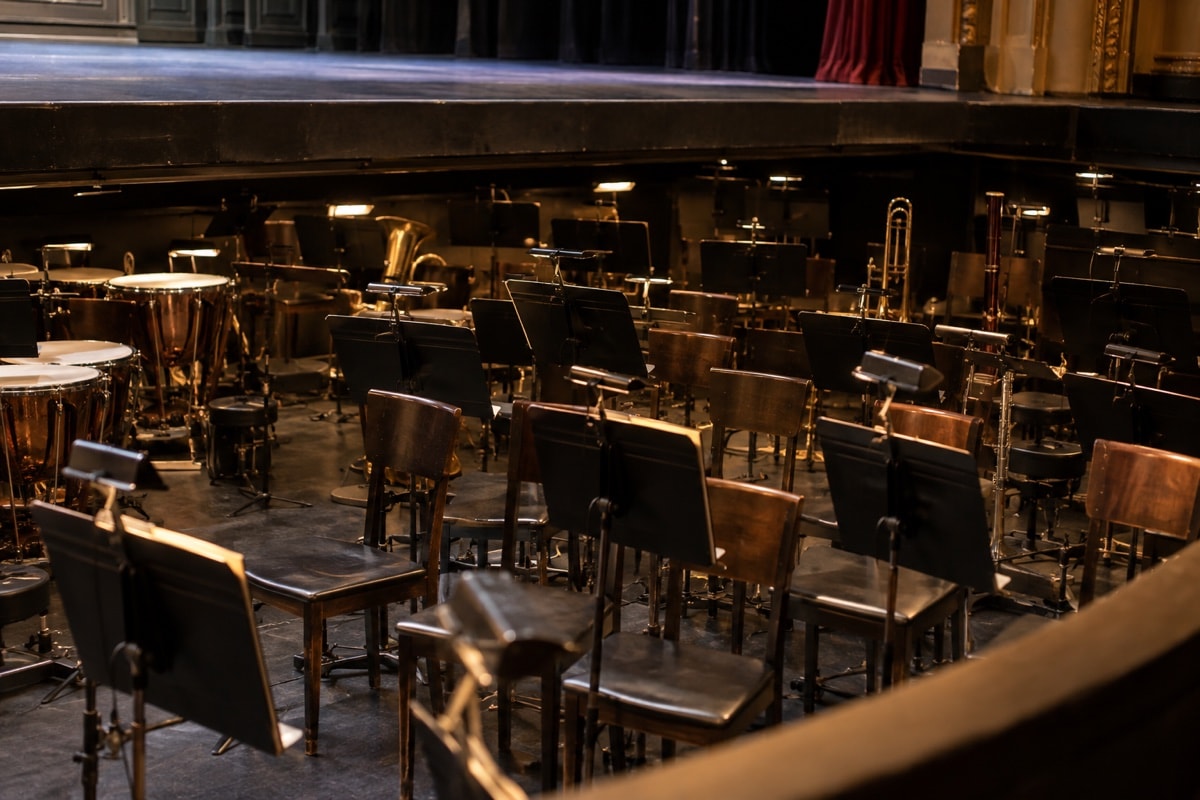
An orchestra concert makes ensemble coordination visible. String sections share bow movement, winds and brass enter from different physical points, percussion expands the rear of the platform, and the conductor shapes time across the group. The audience can listen to the whole while also watching individual lines pass through the ensemble.
Ballet uses the proscenium as a compositional frame. Patterns travel across the floor, entrances emerge from the wings and scenery or light establishes depth. When live music is present, stage and pit become one timed system even though performers and musicians occupy separate levels. Resident companies can deepen this relationship by returning to the same room repeatedly.
Musicals and plays
Musical theatre combines singing, acting and dancing in the service of dramatic storytelling. The form can require microphones, an orchestra, moving scenery, costume changes and tightly coordinated transitions. The musical theatre overview describes that integration of song, spoken dialogue, acting and dance. A touring version adapts a production to the dimensions and systems available in each venue.
A play may use fewer visible elements yet demand equal precision. Spoken language, silence, blocking and changes in light direct attention. Scenic scale ranges from a nearly bare platform to a detailed interior. In both plays and musicals, a listing should identify the nature of the work, expected length and any content information without promising that every production of a title is alike.
Comedy, illusion and solo performance
Stand-up comedy needs clear sound and a close feedback loop with the audience. Stage illusion depends on controlled sightlines, timing and the agreement to watch a crafted effect. A one-person show may blend storytelling, music, character and direct address. These forms can look technically simple because the human figure is central, but simplicity raises the importance of every cue.
The auditorium contributes scale. A single microphone in a large historic room creates visual contrast; a small gesture can become significant when hundreds of people attend to it at once. Listings help by distinguishing a comedy set, theatrical monologue, variety programme or illusion show rather than grouping every solo event together.
Popular music, jazz, cabaret and tribute
Touring singers and bands bring amplified sound, lighting and their own stage arrangement. Jazz may emphasize improvisation and exchange among players. Cabaret often narrows the distance between performer and audience, even when it appears in a larger room. Tribute concerts are defined by the repertoire or style they revisit rather than by an original artist appearing.
Those differences affect expectations. A seated theatre concert does not behave like a club or outdoor festival. The room concentrates focus toward the proscenium, while sound engineers adapt amplification to reflective surfaces and balcony levels.
Family performance and puppetry
Theatre for young audiences is made with younger spectators in mind, but that does not mean one age band or one style. Puppetry, circus skills, science demonstrations, music and character-based storytelling can all appear. Duration, sound intensity, language and visual clarity may be shaped for the intended age.
Adults choosing an event should read current age guidance and practical details rather than relying on a broad family label. A matinee can still be loud, dark or long. The most useful listing gives enough form and sensory context for a thoughtful choice.
How to read a listing
Start with presenter, venue and performance format. Then check running time, interval, age or content guidance, access services and any production-specific entry rule. Distinguish the title of a work from the company or touring production performing it. If a listing is incomplete, use the current official source before making plans.
This page is a map of forms, not a schedule. The linked genre guides go deeper into how each kind of event uses a theatre and what an audience might notice once the lights dim.