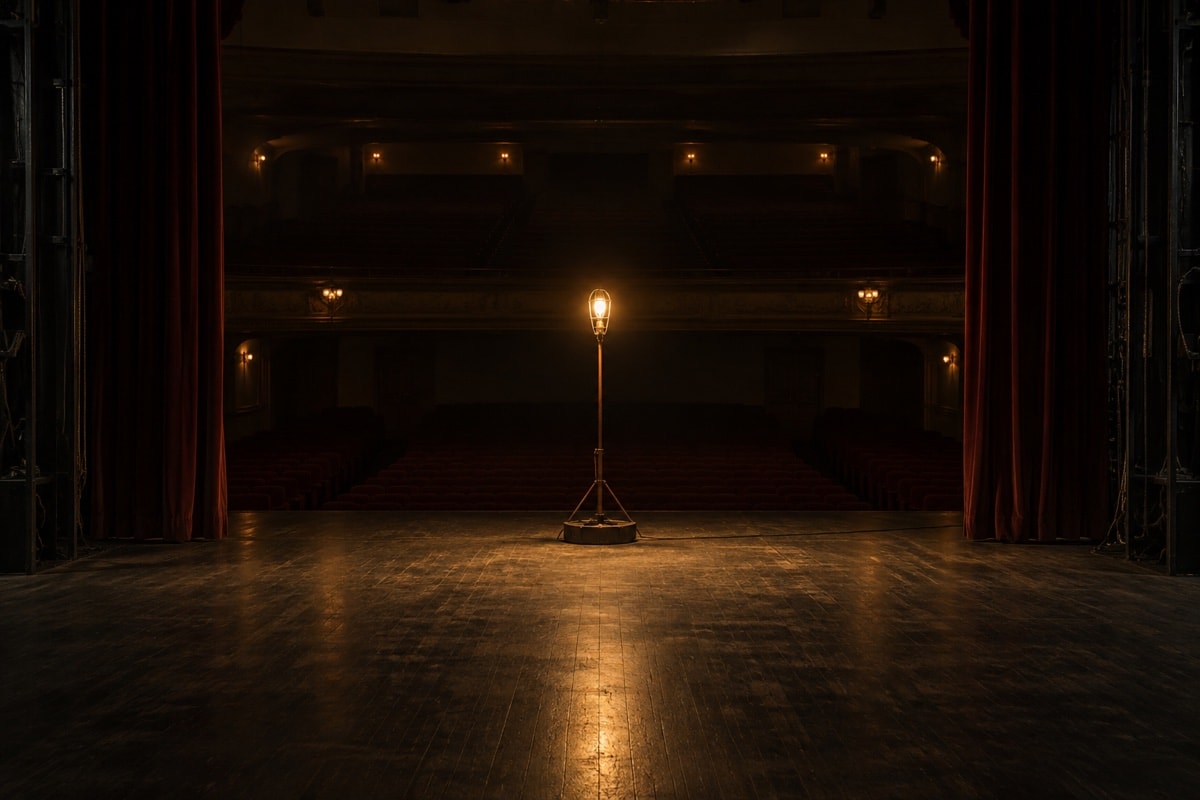
The scale of a single figure
A lone performer on a broad stage creates strong visual tension. There may be little scenery to establish scale, so body position, microphone stand, stool, small table or pool of light becomes unusually important. The surrounding emptiness is not unused; it gives each move and pause a clear outline.
Large theatres can still support intimacy. Amplification carries vocal detail, lighting narrows the frame, and the audience's shared concentration makes a quiet gesture readable. The performer addresses a room full of individuals while responding to the group as one changing presence. Each response reshapes the next moment.
Stand-up and the feedback loop
Stand-up comedy is built around direct address. Material may be carefully structured, but its delivery responds to laughter, silence and the pace of attention. A pause can be part of the joke; speaking over a response can erase the next line. The room therefore participates through timing even when no audience member speaks.
Sound clarity is essential. A blurred consonant or delayed loudspeaker can disturb rhythm more than it would in a musical passage. Lighting usually keeps the face and body readable without distracting movement. The technical design often appears simple because its job is to disappear behind language.
Stage illusion and controlled sightlines
Stage magic presents effects through practiced technique, misdirection and theatrical framing. A proscenium can help by controlling where attention gathers, but a wide auditorium also creates many viewing angles. The production considers side seats, balcony height, lighting spill and the placement of every object.
The pleasure is not a demand for explanation. It comes from watching a sequence that establishes an expectation and then changes what seems possible. Music, speech and light can guide attention, while the performer's timing turns method into drama. Recording restrictions can be especially important because a fixed camera view does not experience attention in the same way as a live audience.
The many forms of a solo show
A one-person show can be memoir, character study, lecture-performance, monologue, music or a blend of forms. Some create multiple characters through voice and posture; others stay with a single point of view. Objects and projections may expand the world, but the performer remains the visible source of continuity.
Solo work makes transitions exposed. A costume adjustment, lighting shift or change in vocal range may have to carry the function that a full scene change performs elsewhere. Stage management and cues are no less important because fewer people are visible. Precision supports the impression of freedom.
Audience participation has boundaries
Comedy and variety sometimes include conversation with the audience. The possibility can create energy, but participation should not be assumed from a genre label. A person seated near the stage remains an audience member unless the performance clearly invites interaction.
The room also has collective boundaries. Persistent calling out can interrupt pacing, and recording can distract nearby viewers. Current venue guidance defines the practical rules, while ordinary consideration protects the concentration on which a solo event depends.
Reading a listing
A useful description identifies the form: stand-up set, theatrical monologue, illusion programme or mixed variety. It may also give running time, interval and content guidance. Those details help an audience choose without revealing effects or turning the listing into a review.
No performer is named in this guide, and no current events are listed. The focus is the craft shared across many productions: making voice, timing, light and expectation large enough to fill a theatre while keeping the encounter personal.
What to watch
Notice how the performer establishes the room during the opening minutes. Watch the use of center and edges, the length of pauses, and the way technical cues mark changes in subject or scale. In illusion, notice how attention moves before the apparent event. In comedy, listen for the structure underneath conversational delivery.
These forms reveal theatre in concentrated form. The stage may be nearly empty, yet the essential exchange remains: one live action, witnessed by many people at the same time.