Use the current venue's information
Event times, admission terms, age guidance and access arrangements can change. The dependable starting point is the current venue or presenter's own published information. This guide has no admission inventory and no sales function. A listing copied elsewhere may omit a schedule change, a seating restriction or the policy that matters to a particular performance.
Before leaving, confirm the performance time, the opening time for public areas and any special entry instructions. If accessible seating, captioning, sign interpretation, audio description or an assistive listening system is important, check the arrangement before completing the admission transaction. Different events in the same room can offer different services.
Arrival is part of the timing
Arriving early creates room for ordinary delays: finding parking, walking from the station, passing through entry procedures, locating a level and visiting the restroom. It also lets the front-of-house team seat people while house lights are up. The goal is not ceremony for its own sake; it is to protect the quiet opening of the performance.
The front of house includes the audience-facing areas and staff of a theatre. A house manager coordinates that side of the operation, while ushers help with directions, seating and audience safety. Their instructions may respond to conditions that are not obvious from the aisle, such as a temporary route or a hold at the auditorium door.
If the performance has begun
Late seating is often timed to a suitable pause. Opening a door or crossing a row can distract both artists and audience members, so an usher may ask late arrivals to wait or may direct them to temporary seats. The best available moment depends on the work: a concert movement, a scene break or a lighting transition may create a natural opening.
A late-arrival policy is not a judgment about the reason for delay. It is a way to balance access with the concentration already established inside. Follow the direction given on the night, even if the seat printed on the admission document is elsewhere. Movement may be possible later.
Phones, photographs and recording
A glowing screen is visible across a dark auditorium. Silence devices fully, dim smart watches and put screens away before the house lights fall. Photography and recording rules vary because they involve performer agreements, rights, safety and distraction. The absence of a flash does not automatically make recording acceptable.
If a venue permits photographs before the event or during a curtain call, that permission should not be extended to the rest of the performance. A simple rule is to follow the current announcement and posted information. The experience is easier when the device stops being another object to manage.
Intermission and leaving the room
An intermission gives the audience and production a planned pause. House lights rise, doors open and public areas become active at once. Notice the announced length and allow time to return; lines can move slowly in a full building. Staff may use the interval to adjust seating or assist visitors who need a different route.
If leaving during the performance is necessary, move at a safe moment and use the nearest indicated aisle. Reentry may follow the same hold as late seating. Keep admission information available if the venue requires it for return to the auditorium.
Bringing a young audience member
Choose a performance whose subject, length, sound level and start time fit the child, rather than assuming every family label suits every age. Explain the darkening room, applause and the expectation of staying in a seat. An aisle location can make a quiet exit easier if the experience becomes overwhelming.
Venue age rules belong to the current presenter and may vary by event. Some productions welcome very young attendees; others set a minimum age or require an admission document for every seat. Check before traveling. Ear protection, sensory accommodations and relaxed-performance formats should also be confirmed with the venue rather than assumed.
The shared room
Theatre etiquette is mostly attention made visible. Keep conversation for pauses, avoid blocking another person's view and let staff know about spills or hazards. Applause customs differ by form, and there is rarely a need to predict them; the room provides cues.
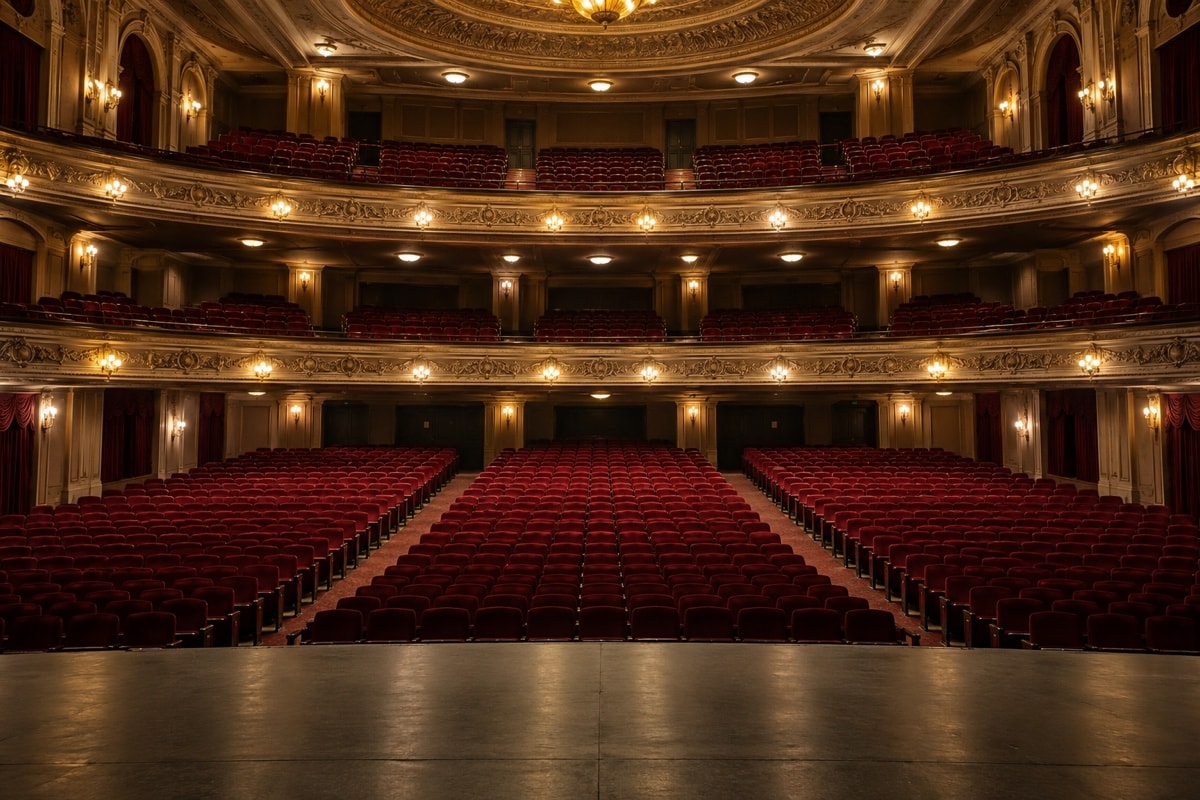
A good visit is not defined by perfect knowledge of tradition. It comes from arriving informed, listening to current guidance and allowing the event to hold the room. Those habits work in a gilded auditorium, a black-box studio and almost any other live-performance space.