Why the room changes the concert
A historic theatre is neither club nor arena. Seats face a single architectural frame, balconies stack listeners vertically, and decorative surfaces reflect sound in complex ways. Touring music enters that geometry with amplification, monitors, lighting and a stage plot designed to make every position work as one picture.
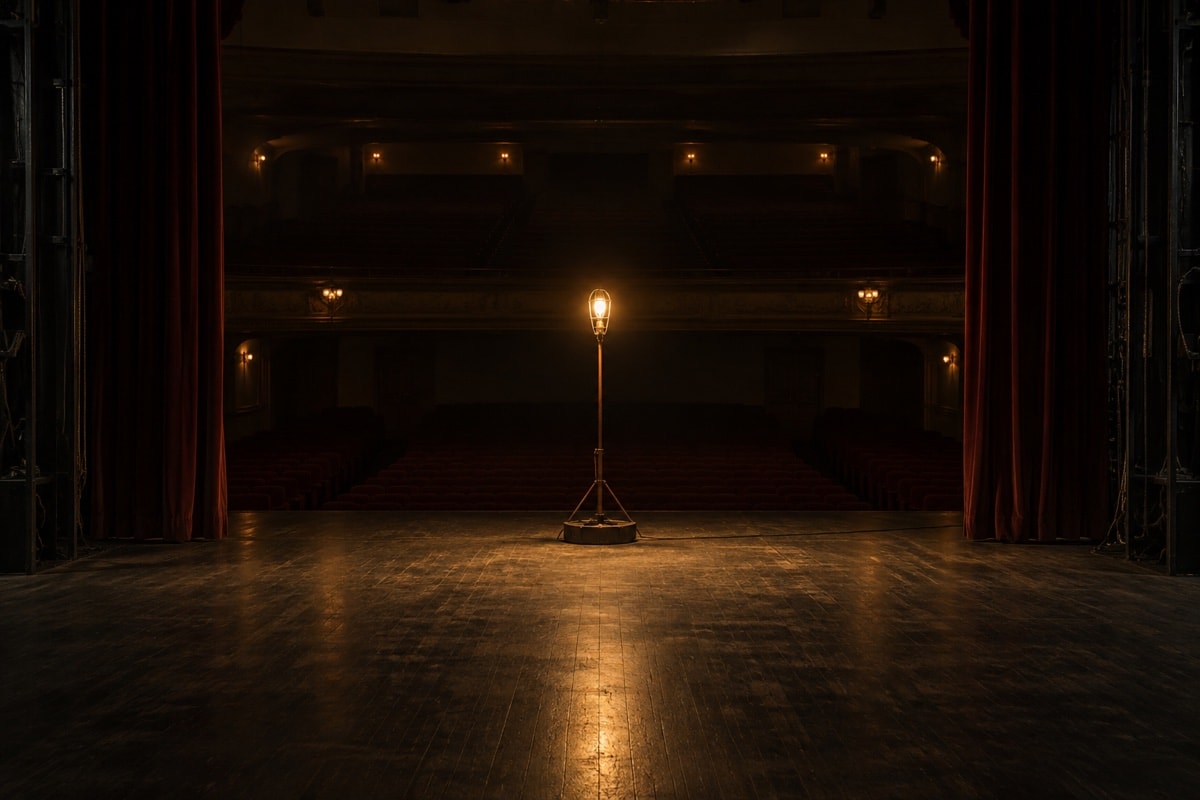
The result can feel intimate even at substantial scale. A singer at center stage has a fixed visual relationship with the whole room. Quiet passages can hold attention because the audience is oriented toward listening, while a bright lighting cue gains contrast against the ornamental enclosure.
Amplification in an old auditorium
Sound teams aim for clarity and even coverage across orchestra and balcony levels. Reflective plaster, overhangs and deep seating areas can respond differently, so loudspeaker placement and timing matter. The mix heard near the control position may not be identical everywhere; engineers balance the room as a whole.
Volume is only one dimension. Vocal intelligibility, low-frequency buildup, instrument balance and the relationship between stage sound and loudspeakers all shape the result. A seated audience also changes absorption compared with an empty sound check. The room becomes part of the instrument once people arrive.
Jazz as exchange
Jazz covers a wide field, but improvisation and musical interaction are central to many of its practices. In a theatre, visual access can make that exchange legible: a glance cues an entrance, one phrase answers another, and attention moves between soloist and ensemble.
A formal stage does not require formal distance. Lighting can isolate a small group within the proscenium, and acoustic detail can draw a large audience toward subtle changes. The theatre's scale frames the music without determining how spontaneous it feels.
Cabaret and closeness
Cabaret is associated with intimate entertainment, often combining songs, spoken material and direct audience address. When cabaret moves into a proscenium room, staging and light can preserve some of that closeness. The performer may speak to the audience as a room rather than play only inside a fictional world.
The label describes a mode as much as a floor plan. A theatre presentation can borrow cabaret's conversational pacing and varied programme while using the technical resources of a larger stage. Listings should make the setup clear because expectations differ between table seating, a studio and a fixed-seat auditorium.
What a tribute act is
A tribute act performs the music or style associated with another act. Some emphasize musical repertoire; others also evoke an era through costume, arrangement or stage manner. The attraction lies in hearing familiar material interpreted live, not in the appearance of the artist connected with the original recordings.
Clear descriptions prevent confusion. A listing should identify the event as a tribute and avoid language that suggests the source artist is present. The musicians onstage still have to build a coherent concert, shape an arc and meet the acoustic demands of the room.
Lighting, pacing and the stage picture
Concert lighting turns songs into a visual sequence. Color, angle, haze and movement can enlarge a small ensemble or divide the proscenium into separate zones. The lighting rig has limits of position, power and focus, so touring designs are adapted to the installed system and available setup time.
Pacing matters just as much. Transitions, spoken introductions and pauses give the audience a way to follow changes in mood. In a seated theatre, the ending of one number and preparation for the next are fully visible; a good running order makes that continuity feel intentional.
Listening from different seats
A central orchestra seat offers a direct stage picture, while side locations reveal depth and balcony seats show the lighting composition as a whole. Sound also varies by location. No single section is automatically best for every concert or preference.
When selecting a place, consider whether the priority is facial detail, a broad view, easy aisle access or a balanced sense of the room. Current seating and access information must come from the presenting venue. The performance itself begins with that relationship between listener, stage and architecture.